




About a week ago, something interesting happened online: the Chinese company Moonshot AI quietly (literally without a press conference or any announcements) rolled out the Kimi K3 model, and now its competitors’ stock prices are plummeting by 27%. As you can imagine, this didn’t happen for no reason.
What is this Kimi K3?
Imagine Claude or GPT-4, but with 2.8 trillion parameters. Yes, you read that right—it’s the largest open-source AI model in history. For comparison: DeepSeek V4 has 1.6 trillion, and Alibaba’s Qwen has 397 billion.
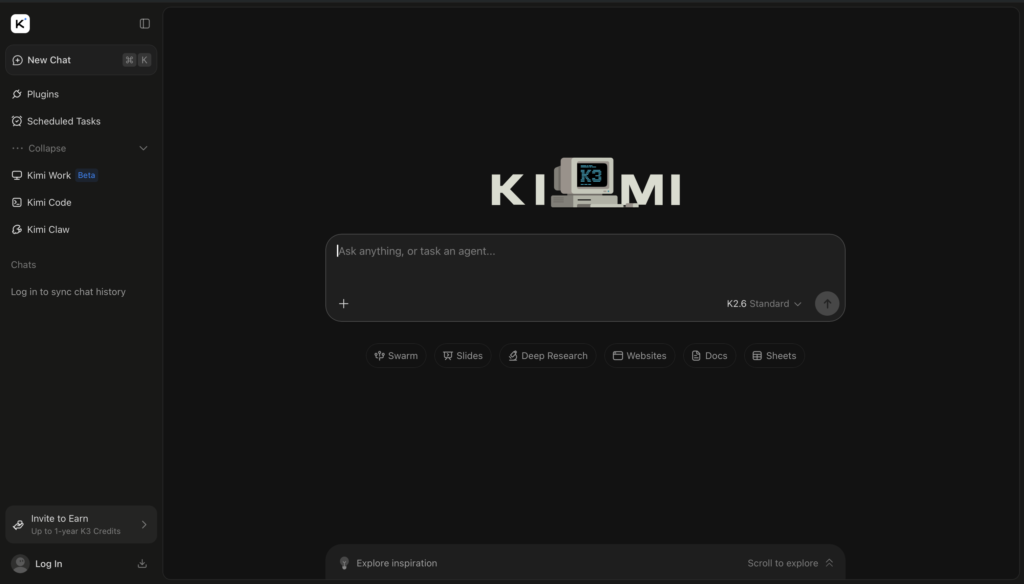
And most importantly, it’s an open-weight model. This means the model’s weights are completely open. Anyone can download it, install it on their own server, and use it without relying on an API. No subscription, no cloud service, no limits on the number of requests—just you and a giant AI in your basement.
Why is this a threat to Claude?
The question of cost. Moonshot has set prices that have made competitors sit up and take notice:
- $0.30 per million input characters (when using the cache)
- $3 per million characters (without the cache)
- $15 per million output characters
For comparison: Claude Opus is more expensive. And if you bring your own servers and install Kimi K3 locally—it’s completely free.
Performance. In standard tests, Kimi K3 competes with Anthropic’s top models. Some experts say it’s already on par with Claude Opus 4.8. Although, to be honest, there aren’t any independent benchmark tests yet, but the market has already spoken through its stock prices.
Context window. The Kimi K3 cluster operates with a 1-million-token context window. That’s absolutely mind-blowing. You can feed it entire books, documents, and codebases—and it will remember everything.
A quiet launch = a bold move
Moonshot launched Kimi K3 without fanfare or press releases; they simply activated it on their website overnight—and that was it. It’s similar to how DeepSeek rolled out R1 in January—when no one was expecting it or prepared for it.
This tactic works because it doesn’t give competitors time to respond. Shares of other Chinese AI companies fell by 16–27% because investors suddenly realized: why pay at all if there’s an open and free alternative?
Who’s behind Moonshot?
This isn’t just some unknown startup. Moonshot is funded by Alibaba, Tencent, and Meituan—top Chinese companies. Back in April, Kimi.com (a chatbot based on this model) was already generating $200 million a year in subscription revenue. Now they’re seeking funding at a $30 billion valuation.
This is a major player with the capital, infrastructure, and 36 million monthly active users.
Read Altho: Chat GPT-5
What’s the catch?
There’s always a catch. Moonshot says it plans to make Kimi K3 both open-source and a commercial model. Something like: here’s the open-source version, and here’s the API with new capabilities.
Technically, they’ve already invested in the Mooncake project (which won an award at FAST 2025), which can efficiently handle massive models. So they know how to do this cost-effectively.
What’s next?
Most likely:
- Independent tests will be released in the coming weeks that will confirm (or refute) Moonshot’s claims
- If the performance truly lives up to the claims, many companies will simply switch to a local deployment of Kimi K3
- Anthropic and OpenAI will be forced to lower their prices or release their own open-weight models
- The AI market will become even more competitive and accessible
So, what can we expect from the Kimi K3?
Kimi K3 isn’t just another Chinese AI model that’s “if you believe the claims.” It’s a model from a company backed by trillions in investment, with a proven track record (Kimi.com is already popular), real infrastructure, and a pricing model that undermines Western dominance.
Claude is an excellent model. But if Kimi K3 is really as good as they say, the question “why pay Anthropic $20 a month?” could become very pressing.
Next, we’ll look at independent benchmarks and track the flow of money. Money usually never lies.


Leave a comment